Homeowners see the electrical panel primarily when something fails. The lights head out, a breaker journeys, and you open the gray door to a forest of switches and labels composed by three various individuals over twenty years. Specialists see something else. We see a map of the building's electrical life, the options made by whoever built it, and the compromises made since. Understanding what lives inside that metal box settles, whether you are fixing nuisance journeys, planning an EV battery charger, or simply trying to label circuits accurately before the next storm.
This is a directed walk through the panel's innards. We will remain useful and grounded in what a working electrician observes: how breakers get a buss bar, why neutrals and grounds need to stay truthful, how service devices varies from a subpanel, and where the code gets particular. No theatrics, just the things that matters when you get rid of the dead front and look inside.
The panel as a system
Think of an electrical panel as a distribution hub with 3 jobs: receive power from the utility, divide that power into safeguarded branch circuits, and supply a safe enclosure that will include faults. It does those tasks with a handful of parts organized in a pattern that repeats across brand names and eras.
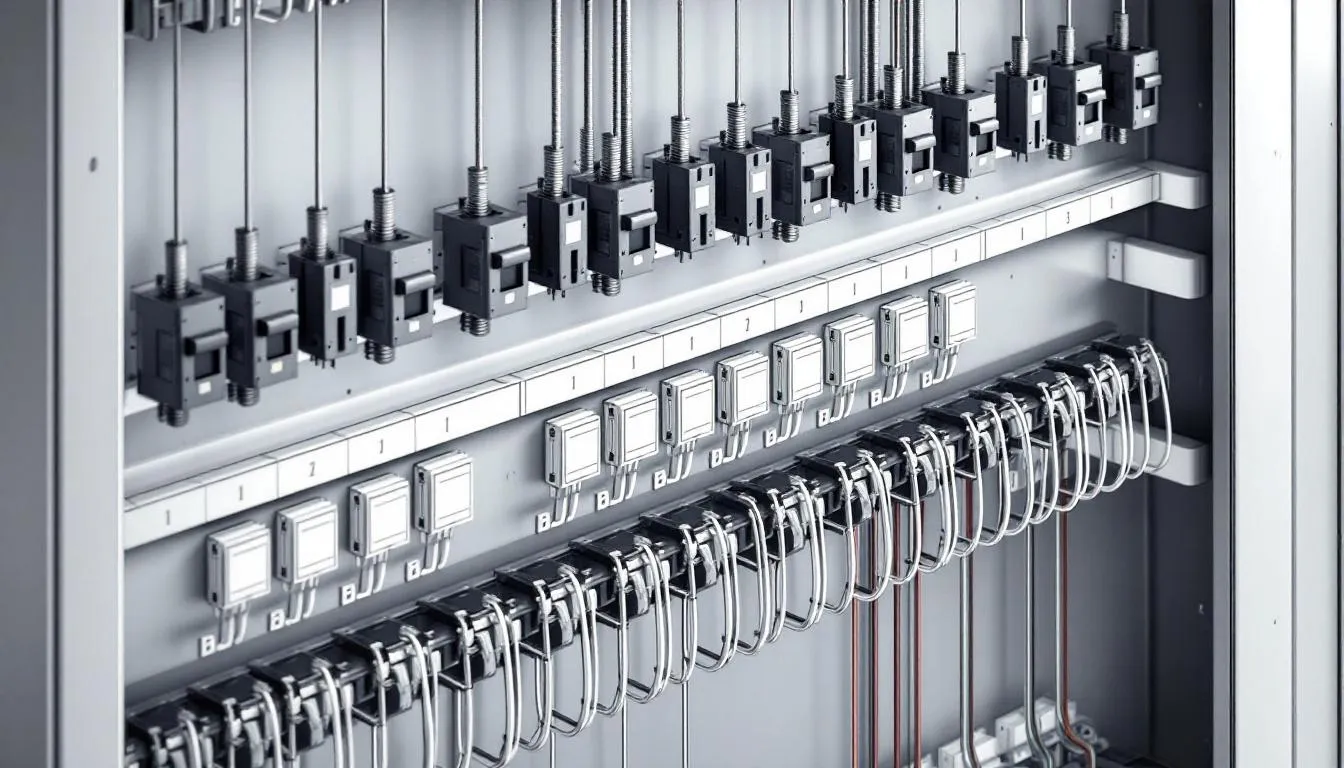
Power goes into at the top or bottom through service conductors that arrive on a primary detach or main breaker. From there, existing feeds the buss bars. Breakers snap onto those buss bars and feed branch circuits that stray to lights, receptacles, appliances, and equipment. Neutral and equipment grounding conductors return to their own bars, which either bond to the can or float off it, depending upon whether the panel is service equipment or a downstream subpanel.
That is the architecture in one paragraph. The devil is in the details: whether a breaker is standard or tandem, how many areas are really offered, how neutral bars are noted for multiple conductors, the size of the service, and how heat and torque impact everything.
Main service panels versus subpanels
Every structure has one service detaching means, though it can be a group. In a normal residence with a main breaker panel inside your home or just inside a garage, that primary breaker is the service detach. It marks the point where neutrals and premises are bonded. That bond connects the grounded conductor to the metal can and to the grounding electrode system, developing a single recommendation to earth.
A subpanel is any panel downstream of that service detach. Subpanels must keep neutrals isolated from the enclosure and from the devices grounding conductors. The bond screw or strap that ships with many panels need to be removed or overlooked in a subpanel. You still bring an equipment grounding conductor to the subpanel and tie it to the can, however the neutral bar should float. Mis-bonded subpanels trigger ghost currents on metal courses, odd feedback when you shut circuits off, and sometimes that faint tingle when you touch a water pipe and a tool at the very same time. I have determined half an amp flowing on a copper water line in a structure with a neutral-to-ground bootleg in a subpanel. It did not journey anything, however it sure made the structure's audio devices buzz.
If you have a meter-main combination outdoors with breaker areas and after that a load center inside, the outside devices is the service. The indoor panel is a subpanel. That detail determines whatever about how you land neutrals and grounds.
The main breaker and service conductors
The primary breaker is sized to the service. Numerous homes have 100, 150, or 200 amp ratings. The number on the breaker tells you the optimum continuous current the panelboard and service equipment are developed to manage, assuming the remainder of the setup is compatible. Upsizing the main breaker without upsizing service conductors and meter devices is not a shortcut to more capability, it is a code infraction and a fire risk.
Service entryway conductors are usually aluminum in modern-day homes. You can identify the dull color and the size. Aluminum is great in this context if lugs are noted for AL and are torqued properly. I have fixed more heat-scarred lugs by cleaning oxide, including the manufacturer-approved anti-oxidant where needed, and torquing to spec than I can count. The opponent is not the metal, it is loose terminations and corrosion.
Homes without a primary breaker sometimes have a service-rated detach upstream, such as a merged switch under a meter. In that case, the indoor panel is not service equipment. You check for the bonding strap and remove it if present.
Buss bars, phases, and area counting
The buss bars are the panel's foundation. Two hot busses run down the board, fed by the primary. They alternate so that nearby breaker spaces pick up opposite phases. That is why a two-pole breaker, which inhabits two surrounding spaces, sees both legs and can deliver 240 volts for varieties, hot water heater, and EV chargers.
Space counting is more difficult than it looks. A 20-space panel might accept 20 full-size breakers, however some are listed for tandem breakers in particular positions. Slapping tandems all over might offer you a warm fuzzy feeling that you created more circuits, however if the labeling says "No CTL tandems in positions X-Y," you are out of bounds. Panels built after particular code cycles use rejection features to obstruct unlisted breaker types. The proper path when you lack areas is either a panel upgrade or a correctly set up subpanel fed by a two-pole breaker of sufficient size. Cheating with unlisted tandems is an incorrect economy that appears years later on when a new load journeys things randomly and nobody can discover the cause.
The neutral buss is a bar with numerous listed holes. Those holes are not all the same. The majority of panels permit one neutral conductor per terminal, even if two devices grounds are allowed under a single screw of the grounding bar. That guideline exists to keep neutral connections reliable. I still see two neutrals under one screw from older work. It deserves the time to separate them if you are doing other improvements.
Breaker types and what they protect
Standard thermal magnetic breakers measure both overload and short-circuit existing. They have a bimetal component that bends with heat with time, and a rapid magnetic trip for faults. That is the standard workhorse you will find feeding receptacles and lighting.
Ground-fault circuit interrupter breakers compare present between the hot and the neutral and trip when a little imbalance appears, typically around 5 milliamps for personnel security. That imbalance suggests existing is taking a course it must not, maybe through a person in a damp location. Kitchens, restrooms, outdoors, garages, unfinished basements, and specific laundry circuits call for ground-fault security. A GFCI can reside in the breaker or at the receptacle. Utilizing one GFCI to secure downstream basic outlets works if the load course is uncomplicated and the labels stay intact.
Arc-fault circuit interrupter breakers try to find the signature of arcing in the waveform. They journey on patterns that a standard breaker neglects, which helps reduce fires from harmed cables, staples through cable televisions, or loose connections. Bedrooms began the pattern, and now numerous habitable rooms fall under arc-fault requirements. Mix AFCI is a common label, and it describes both series and parallel arc detection, not GFCI plus AFCI. People blend that up, especially when they see "mix" and assume two innovations. If you require both arc-fault and ground-fault, select a dual-function breaker noted for both. Some panels allow a GFCI breaker upstream and an AFCI receptacle downstream to please requirements, but coordination can get messy.
Handle ties and two-pole breakers matter for multiwire branch circuits, which use a shared neutral between two hots on opposite phases. The breakers must be tied so that an employee can not open one leg and leave the other stimulated. A shared neutral without a typical detach is a service call waiting to happen. I once traced a kitchen area circuit where the dishwasher and disposal shared a neutral across two various single-pole breakers with no tie, fed from the exact same stage because somebody reorganized things. That neutral saw full current with nowhere to cancel, and the insulation informed the story with browning and odor.
Wire sizes, breaker ratings, and the art of matching
Conductor size should match breaker size and product. Copper and aluminum have different ampacities. Normal family pairings: 15 amp with 14 AWG copper, 20 amp with 12 AWG copper, 30 amp clothes dryer with 10 AWG copper or 8 AWG aluminum, and so on. Ambient temperature, bundling, and distance can affect allowed current, but inside homes the basic tables cover most cases. The gotcha depends on terminations and gadgets. If a receptacle is ranked only for 15 amps, do not feed a daisy chain of them with a 20 amp breaker and 12 AWG and then put a 20 amp T-slot receptacle at the end since the device has a 20 amp plug. You require the correct gadget ranking throughout or a dedicated circuit sized to the load.
Equipment nameplates win the argument. If a mini-split heat pump demands a 25 amp overcurrent gadget and 12 AWG copper, that is what it gets, even if your impulse is to utilize 10 AWG. The manufacturer's listing and directions are enforceable. Panels bring the same guideline. If a breaker brand name is not noted for the panelboard, skip the aftermarket "it fits" style of thinking. Breaker contacts and clip tensions are engineered to match the buss geometry of the listed series.
Neutral bars, ground bars, and bonding
In the service devices, neutrals and grounds satisfy. The bond screw or strap ties the neutral bar to the metal can and from there to the grounding electrode system: rods, a Ufer structure electrode, metal water piping within five feet of entry, or other accepted electrodes. You want a low impedance course to clear faults, and you desire precisely one neutral-ground bond.
Downstream in subpanels, the neutral bar needs to be isolated. That means the green bond screw stays in the bag and a different ground bar package is installed and bonded to the can. If you acquire a subpanel with the neutral bonded and no ground bar, correct it. The threat is not fictional. Unwanted current will pick whatever parallel course decreases impedance: metal conduit, cable armor, building steel, even protect drains on information cable television. Strange interactions flower when neutrals are bonded where they must not be.
Neutral bars have little notations stamped near the holes showing the conductor sizes they accept. A 14 AWG copper in a hole listed for 6 AWG through 10 AWG is wrong, even if the screw tightens up. The clamping surface is developed for an offered range, and utilizing the incorrect hole causes heat and intermittent issues.
The enclosure: more than a box
The panel's enclosure protects against live parts. The dead front with its filler plates and breaker openings keeps fingers out of risk. It likewise channels air. A panel with every knockout stuffed with cable televisions is not the like one with neatly dressed conductors and minimal obstruction. Heat is the silent gamer. Breakers live longer and problem journeys drop when the panel is not crammed with cable television slack covering the busses.
Labeling matters. A panel directory that in fact matches truth conserves hours and lowers threat. I keep a small circuit tracer in my bag, but an assistant flipping breakers while I call out loads from rooms still works. Mark the huge stuff plainly: range, clothes dryer, hot water heater, air handler, heat pump, microwave, dishwasher, garage door opener. If a breaker feeds a receptacle controlling a sump pump or aquarium, circle it and compose a clearly visible note. Tripping that circuit inadvertently throughout a restoration has actually consequences.
Clearances are not optional. Working area in front of panels keeps you safe and keeps inspectors delighted. I have actually crawled through storage closets stacked high to reach a panel. No one is considering battling a fire or replacing a breaker because mess. Keep 3 feet of clear working space and keep the course unobstructed. It is not simply code, it is an expert courtesy to anybody who follows you.
When panels age out
Panels do not last forever. Mechanical parts get tired, steel rusts, and listings evolve. There are brand names and design lines that the trade prevents because of recorded failure modes. https://tradesmanelectric.com/what-is-an-electrical-panel-basics-maintenance-and-when-to-upgrade/ Stab-Lok breakers from certain years have actually earned their reputation for not tripping reliably under fault conditions. Other panels have bus stabs that loosen and arc, tarnished metal around breaker jaws, and signs of heat. If you see soot at a breaker stab, pitting, or a breaker that wiggles loosely on the buss, it is time to evaluate replacement rather than a band‑aid.
Upgrades also originate from altering demands. Include an induction variety and a 48-amp EVSE and unexpectedly a 100 amp service feels tight. Load computations are not uncertainty. You tally repaired devices, general lighting loads, small appliance circuits, laundry, and heating or cooling demand using the guidelines in the code. A quick truth check: a typical contemporary home with electric cooking, electrical dryer, heat pump, and an EV usually lands at a 200 amp service, often 225. Demand aspects assist, however stacking constant loads during winter season nights can press a smaller sized service to the edge.
Arc fault and ground fault in practice
Arc fault breakers made a rough track record early on for tripping on motor starts and dimmers. The gear has actually enhanced. Modern combination AFCI gadgets comprehend many legitimate waveforms. That stated, particular vacuum and older treadmills still disturb them. The workaround is not to switch in a basic breaker, it is to manage circuit projects, utilize noted filters where suitable, and validate that neutrals are not shared improperly. I have lowered annoyance trips by separating lighting from receptacles in challenging rooms, or by moving an issue device to a dedicated circuit that does not share neutrals with other loads.
Ground fault trips point to an issue that typically conceals in damp boxes, broken weatherproof receptacles, or torn home appliance cords. I when discovered a GFCI breaker tripping every early morning in a lakeside home. The offender was a deck outlet whose in-use cover had actually lost its gasket. Dew condensed within, present dripped through damp wood fibers behind package, and the breaker's 5 mA detection did its job. The fix was a new cover and a bead of sealant. A GFCI that trips periodically is not automatically "too delicate." It is reporting a genuine imbalance, and the downstream environment is normally to blame.
Working securely inside a live panel
Removing the dead front exposes energized parts. The primary breaker lugs stay live even when you throw the primary. That is where a great deal of do it yourself guts turns to caution. If you are going to work inside, deal with the service conductors as untouchable and control your tools. A lost screw in the incorrect area ends up being a flash. Arc flash in a home is rare compared to commercial gear, however that does not make it friendly. Shatterproof glass and insulated tools are not theatrics. Neither is one hand in the pocket while you reset a breaker in a doubtful situation. Even better, if anything feels uncertain, stop and call a pro.
Torque is its own security subject. Breakers and bars come with torque specifications, typically in pound-inches. Over-tightening can split lugs or deform conductors. Under-tightening invites heat. A little torque screwdriver makes its keep. On service employ older homes, I routinely check a sample of terminals during other work. Discovering one that hardly holds a conductor prevails, specifically after years of heating and cooling cycles.
The anatomy of a clean installation
When you open a panel that makes you smile, you see a couple of consistent traits. Conductors are dressed nicely along the sides, with long mild sweeps instead of tight bends. Neutral and ground conductors are cut to reach their bars without excess slack. Breakers related to a room or area typically share a column for readability. Multiwire branch circuits have a two-pole breaker or a listed deal with tie. AFCI and GFCI devices are labeled in the directory and on the panel legend. The bond screw status is proper for the panel's role. Knockout fillers remain in place. No doubles under neutral screws. The main bonding jumper is present where it belongs and absent where it does not. The panel legend notes the precise design of breakers permitted, not simply the brand name, and the breakers set up match.
On a current remodel, we added a subpanel in a kitchen to support a steam oven, a built-in coffee machine, and a dedicated receptacle for a freezer. The existing main panel had area, but the cable paths were unsightly, and annoyance journeys tend to follow ugly. We installed a 12-space subpanel, fed it with a 60 amp two-pole breaker and 6 AWG copper THHN in channel, isolated the neutral, and set up a ground bar set. The result was brief branch runs, tidy labeling, and space to grow. The homeowner will hardly consider it, and that is the goal.
Troubleshooting inside the panel
When something trips, start with the obvious. Reset the breaker completely off, then back on. If it trips quickly, think a fault. If it journeys after a delay under load, believe overload. Arc-fault journeys with a particular home appliance recommend waveform sound or a harmed cord. Ground-fault journeys connected to weather point to outside boxes and covers. Thermal trips on hot water heater can involve aspects shorting to ground inside the tank. Withstand the urge to upsize a breaker to stop journeys. That fix creates bigger issues downstream.
I carry a clamp meter that checks out inrush and leakage. On a problem cooking area circuit with a dual-function breaker, I will secure the neutral and measure imbalance under numerous loads. A consistent few milliamps is great, however one device pressing you to the threshold indicates a fault. On multiwire circuits, any imbalance on the shared neutral points to miswired loads on the very same phase or a connection concern. Sometimes the best test is old-fashioned: get rid of gadgets from a circuit one by one until the breaker holds.
Planning for brand-new loads
The last decade altered normal residential electrical need. Induction varies pull constant 40 to 50 amp circuits. Heatpump include 20 to 60 amp air handlers and auxiliary heat strips. Level 2 EV charging varieties from 16 to 48 amps continuous, which indicates 20 to 60 amp breakers with constant load derating. A 200 amp service that felt generous in 2005 can feel tight after two EVs and an all-electric kitchen.
Before adding a big load, examine the panel directory, validate actual breaker counts, and do a load calculation. Consider a clever load management gadget where code enables it. I have actually installed EVSEs that throttle based upon main breaker amperage and family need, preventing a service upgrade while keeping charging trustworthy. Those services work best when the panel is arranged and labeled, otherwise you spend more time tracing circuits than setting up the control gear.
The little details that avoid future headaches
- Leave slack where it helps, not where it hides problems. A little service loop in a cable can assist future changes, but stuffing loops over the buss produces heat pockets. Use colored tape to re-identify conductors only where code permits. Do not reidentify small neutrals as hots since you ran short of wire colors. Keep AFCI pigtails cool and brief. Long neutral pigtails coiled behind breakers produce mess and can complicate future work. Tighten filler plates. Open knockouts at the dead front invite curious fingers, pests, and dust. Update the directory site with a pencil, then reprint a clean variation. The best time to fix labeling is while you can still remember what you traced.
When to call an expert
Comfort levels vary. Swapping a breaker like for like within a listed panel and properly landing a single branch circuit can be within reach for a cautious and educated homeowner. Changing a panel, remedying a mis-bonded subpanel, or including a multiwire branch circuit needs more experience. Licenses and assessments protect you and protect insurance protection. If your panel shows heat damage, rust, evidence of water entry, or brand-specific threats, bring in a licensed electrical contractor. It is not a sales pitch when somebody recommends a panel replacement after finding arced buss stabs. That recommendation comes from seeing what happens when the issue is deferred.
Final ideas from years in the field
Electrical panels just look simple from the pathway. Inside, they reflect a structure's history, good and bad. When I open a cool, labeled panel, I expect uncomplicated service calls. When I open a bird's nest with doubled neutrals, bootlegged premises, and whispering-hot tandems, I decrease and begin documentation. The best panels are boring in the right ways: foreseeable, roomy, and truthful about what is bonded where. Breakers and buss bars do their job for years when they are set up thoroughly and kept with respect.
If you take nothing else from this, keep in mind 3 concepts. Initially, neutrals and premises satisfy only once at the service, and they remain apart all over else. Second, breaker types exist for reasons rooted in real threats, so select and place them intentionally. Third, area is not a high-end inside an electrical panel, it is a security feature. Offer the devices room to breathe, label it so others can read your mind later, and future you, or the next person on the job, will thank you.